

Utah’s summer heat drives earwigs indoors, and the reason isn’t what most people expect. When daytime temperatures climb past 80 degrees, the exposed surface of your yard becomes too hot and dry for earwigs to survive. The one place that stays cool and damp is the narrow band of soil right against your foundation, kept moist by irrigation, drip lines, and shaded mulch. That perimeter strip becomes a refuge, concentrating earwig populations just a few inches from your exterior walls. From there, getting inside is a short trip.
This plays out every summer across Ogden and Weber County, which is why homeowners who rarely see earwigs in spring suddenly find them in bathrooms and basements by July. At Mountain West Pest Control, we’ve been helping Ogden families manage seasonal pest pressure since 2017, and earwig calls spike right alongside the heat. Our treatments are people-and-pet-safe, which matters when you’re dealing with a pest concentrated near the areas where kids and dogs spend the most time.
Understanding why earwigs show up when they do makes prevention more straightforward. Here’s what’s actually happening and what you can do before populations peak.
Why Summer Is Peak Season for Earwig Invasions in Utah
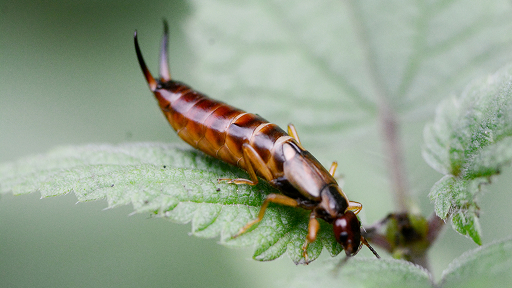
The European earwig (Forficula auricularia) is the dominant species in Utah yards. It’s the one with the curved forceps at the tail end that look alarming but are mostly used for defense and mating, not biting. Populations build through spring and reach their highest density in mid-to-late summer once temperatures consistently stay above 80 degrees. That’s when Weber County homeowners start finding them inside.
The movement indoors isn’t random. Utah’s high-desert climate is dry enough that earwigs depend heavily on wherever moisture concentrates. In a landscaped yard, that’s the irrigated lawn edge, garden bed soil, and the foundation perimeter where drip lines run. When the outdoor surface dries out during the day, earwigs retreat toward that moisture. If your foundation sits at the edge of that zone, your house becomes part of their foraging circuit.
One more thing worth knowing: earwigs release an aggregate pheromone, a chemical signal that causes others to cluster in the same location. A handful of earwigs spotted inside your home often indicates a larger population already established just outside, drawn together by that signal and working their way in through gaps you may not have noticed.
What Earwigs Are Looking for Around Your Home
Before you can keep earwigs out, it helps to understand what’s making your yard attractive to them. Earwigs need three things to thrive: moisture, dark shelter, and organic matter to eat. Mulch beds, leaf litter, woodpiles, and dense shrubs pressed against the foundation check all three boxes at once.
Outdoor lighting is another factor most people overlook. Earwigs are nocturnal foragers, and like many insects, they’re drawn toward light at night. Standard white bulbs attract significantly more earwigs toward your doors and windows than yellow-spectrum or warm LED bulbs do. Switching your porch and entry lights is a small change that can meaningfully reduce how many earwigs gather near your entry points after dark.
If you have a garden close to the house, it’s worth knowing which plants earwigs favor. In Ogden-area yards, common targets include marigolds, dahlias, zinnias, apricots, and sweet corn. They chew irregular holes in leaves and petals and shelter under plant debris during daylight hours. A garden bed planted directly against the foundation creates a pipeline from earwig-friendly habitat straight to your exterior walls.
How to Cut Off Their Moisture Supply
Moisture control is the most effective long-term prevention strategy, and it starts at the foundation line.
The most reliable physical barrier you can create is a foundation dry zone. This is a 6-to-12-inch band of gravel or crushed stone running directly against the exterior of your home in place of mulch or soil. Earwigs strongly avoid crossing bare, dry surfaces, so this strip breaks the habitat connection between your yard and your walls. It’s supported by pest management research and one of the most practical steps a Weber County homeowner can take.
Watering timing matters more than most people expect. Watering lawns and garden beds in the early morning gives the soil several hours to dry before earwigs begin their nocturnal foraging cycle. Evening irrigation keeps foundation soil damp all night, precisely when earwigs are most active. If you use drip lines, check that emitters aren’t positioned in a way that keeps soil against the foundation persistently wet.
A few other moisture fixes worth tackling:
- Outdoor faucets: Even a slow drip keeps nearby soil damp and creates a reliable moisture source for earwigs foraging at night
- Gutters and downspouts: Clogged gutters overflow near the foundation; clean them and extend downspouts so water drains well away from the house
- Crawlspaces and basements: Once earwigs find their way inside, damp below-grade spaces become harborage zones; a dehumidifier removes the interior moisture that makes staying worth their while
Sealing the Ways They Get Inside
Earwigs don’t need a large opening to enter a home. Foundation cracks as narrow as a credit card, gaps under doors with worn weatherstripping, loose-fitting window screens, and unsealed pipe penetrations are all common entry routes. A systematic inspection of your home’s exterior with a tube of exterior caulk, fresh weatherstripping, and door sweeps will close most of them. Crawlspace vents and exhaust vent covers without fine mesh screening are worth checking too. They’re often missed during standard weatherproofing and give earwigs a direct path into the lower areas of the home.
One prevention step that gets skipped more than it should: inspect anything you bring indoors from outside. Potted plants, firewood, and garden tools are common hiding spots during the day. Earwigs shelter in the dark, damp space underneath or inside these items, and when you bring the item in, you bring the earwig with it. Shaking out or checking outdoor items before they cross the threshold prevents a surprising number of indoor sightings.
When DIY Prevention Isn’t Enough
Prevention works well when you catch the problem early, before populations have built up significantly. When you’re already seeing repeated indoor sightings despite addressing moisture and entry points, or finding earwig clusters at the foundation alongside visible plant damage in nearby beds, you’re likely dealing with an established outdoor population that preventive measures alone won’t resolve.
Professional exterior treatment approaches the problem from the outside in. Treating the foundation perimeter and harborage zones before earwigs reach entry points is more effective than reacting to what’s already inside. Our approach concentrates treatment on the exterior of the property first, consistent with integrated pest management best practices for earwig control. This combines inspection, habitat reduction, and targeted treatment to address the root cause rather than just the visible symptoms.
Mid-summer is the right moment to act, before populations reach their late-season peak and pressure on the perimeter intensifies. Mountain West Pest Control is locally owned, BBB accredited, and offers same-day availability for homeowners in Ogden dealing with active invasions. If the steps above aren’t getting ahead of the problem, call us at (801) 874-1412 and we’ll take a look.